Projects
Filtering by:
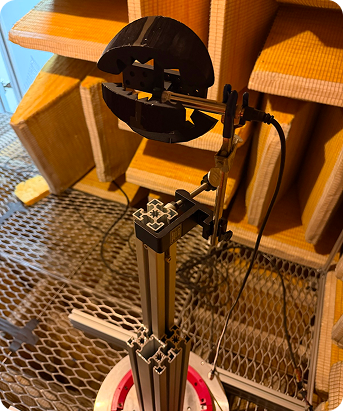
An artificial pinna and CNN decoder can give a single microphone directional hearing, without the need for a conventional microphone array. This system achieves 86.7% accuracy within 10° across a 632-direction test grid. I worked on the design, and 3D modeling of the pinna.
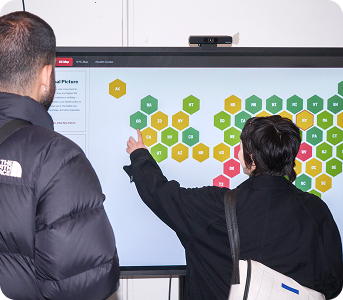
A ballot-style web experience connecting voter turnout to uninsured rates and life expectancy, from national trends down to individual NYC neighborhoods. This was done in partnership with the Civic Health Alliance and showcased as part of NYC Open Data Week 2026. I worked on the data visualization, and translation of the design into code.
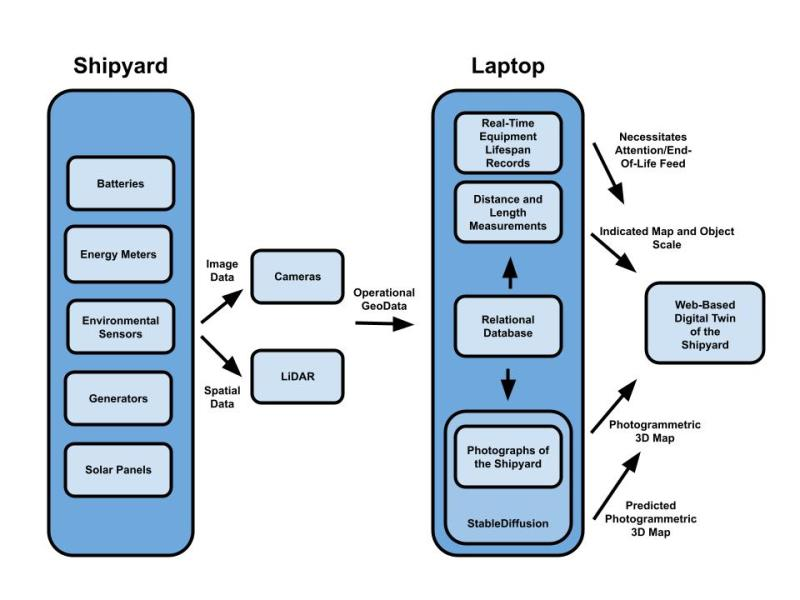
A mock grant proposal for a photogrammetry-based digital-twin system to monitor, predict, and visualize structural decay in Naval shipyards in real time. This was written by me for the NREIP program, as if it were for the OECIF FY24 Call for Proposals.
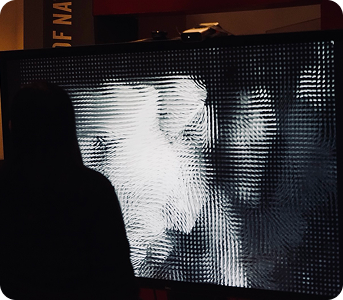
A live, generative installation that converts user movement into flowing optical-flow brushstrokes, accumulating in a fading, self-erasing canvas. This was done as part of a group project for the Generative AI for Art and Architecture course at Cooper Union. I worked on the graphics and physical setup, using OpenCV and an external webcam respectively.
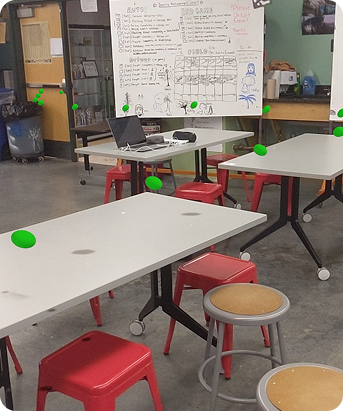
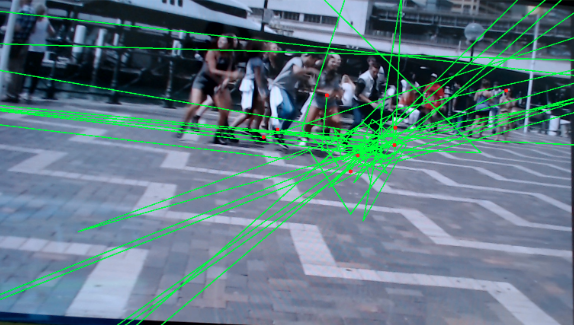
A HOG + MediaPipe program that detects people in a video feed, marks each torso center with a red dot, and trails their path in green. This project was a precursor to The Mirror.
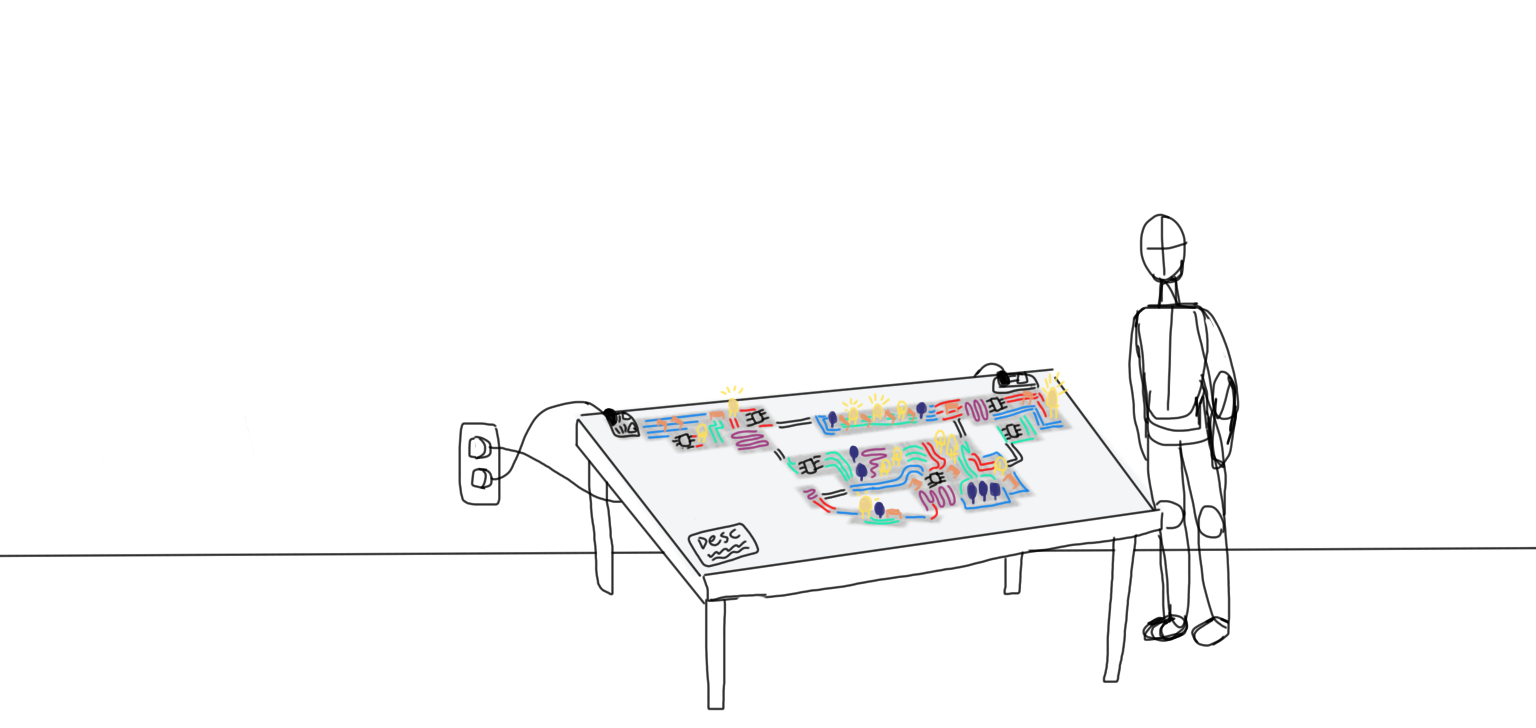
A large-scale breadboard map of NYC that maps heat-wave data, electricity consumption, and public service calls as a thermal resistance circuit analogy. The proposal I wrote for this project was shortlisted from the Data x Design 2026 competition.